
Understanding Winter Energy Watch and Rolling Service Interruptions
As Southcentral Alaska prepares for another winter, MEA wants members to understand the steps utilities are taking to prepare for periods of extremely high energy demand —and to clarify recent discussion about the possibility of rolling power outages.
MEA has 100%of our gas needs secured for our members this winter. However, due to gas shortfalls in the broader southcentral system, MEA may be called upon to do our part to keep the larger system delivering the gas we all need for heat and electricity. In this scenario, Rolling Service Interruptions, sometimes referred to as rolling blackouts, would only be considered as a last-resort emergency measure after other options have been utilized.
Why Are Utilities Preparing?
Southcentral Alaska's natural gas supply continues to tighten as production from Cook Inlet declines. ENSTAR, the natural gas utility that provides heating service to much of Southcentral Alaska, has raised concerns about its ability to meet demand throughout its natural gas system if the region experiences prolonged periods of cold.
This means utilities are preparing for the possibility that during periods of high demand, there could be scenarios when the amount of natural gas we need exceeds what can be delivered to the system at that moment.
Because natural gas is used both to heat homes and businesses and to generate much of Southcentral Alaska's electricity, electric and natural gas utilities have been working together on plans to respond if the system becomes constrained.
Energy Watch: Conservation Comes First
ENSTAR has developed an Energy Watch program in coordination with Railbelt electric utilities, including MEA. The program provides escalating steps utilities can take depending on the severity of conditions.
The first step would be voluntary conservation. During an Energy Watch event, members could be asked to reduce their energy use by taking simple steps such as lowering thermostats, limiting the use of natural gas appliances when possible, and reducing unnecessary electricity consumption.
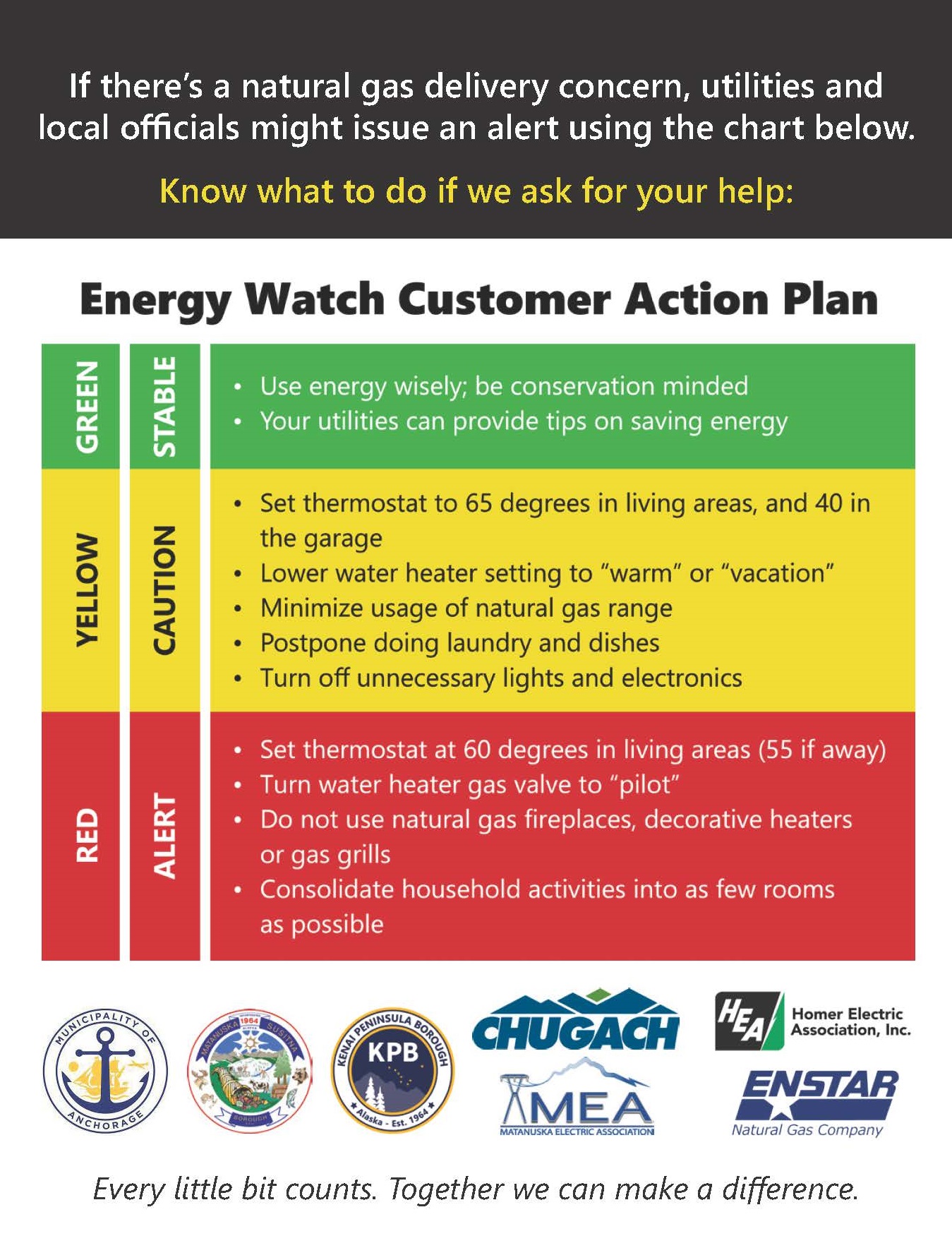
Even modest reductions across thousands of homes and businesses can help lower overall demand during a critical period.
MEA Can Switch Generation from Natural Gas to Diesel
If additional natural gas conservation were needed, MEA has another important option before considering interruptions to electric service.
MEA's Eklutna Generation Station (EGS) has generating units capable of operating on diesel fuel. Depending on system needs, MEA can operate some generating units using diesel while others continue using natural gas, or transition generation to diesel for the entire power plant if necessary.
Doing so would significantly reduce the amount of natural gas MEA needs for electricity generation, helping preserve available gas for critical heating needs across Southcentral Alaska.
MEA maintains diesel supply arrangements for this purpose. During an extended event, MEA could activate those contracts and receive ongoing deliveries of diesel fuel to support continued generation. Because diesel is significantly more expensive than natural gas, if ENSTAR activates the Energy Watch program and requests MEA switch generation to diesel to conserve natural gas for the regional system, ENSTAR would be responsible for reimbursing MEA for those additional diesel fuel costs.
Rolling Service Interruptions Would Be a Last Resort
Only if conditions became severe enough that other conservation measures and fuel alternatives were insufficient would MEA consider implementing its Rolling Service Interruptions (RSI) plan as a last resort option.
Under the plan, MEA's service territory is divided into several groups. Each affected group would experience an outage of approximately 30 to 45 minutes before service is restored and the interruption moves to another group. During continuous implementation of the plan, approximately four and a half hours would pass before the same group could be interrupted again.
The purpose of rolling interruptions is to temporarily reduce demand in a controlled way and protect the stability of the larger electric system during an emergency.
Many Steps Come Before Planned Outages
The most important thing for members to understand is that rolling power outages are not the first response to a natural gas supply concern. They are one of the final emergency tools available to utilities.
MEA expects to have its contracted firm natural gas supply this winter and has multiple options available if Southcentral Alaska experiences severe cold-weather:
1. Utilities would closely monitor natural gas and electric system conditions.
2. Members could be asked to voluntarily conserve natural gas and electricity.
3. Utilities can utilize hydro-power resources and electrical purchases from Interior Alaska.
4. MEA could reduce its natural gas consumption by transitioning generation at EGS to diesel.
5. Diesel deliveries could continue supporting generation during an extended event.
6. Rolling Service Interruptions would only be considered if conditions became severe enough that additional reductions in electric demand were necessary to protect the system. If this is called for, all electric utilities would participate in this effort.
Preparing for an emergency does not mean we expect one to occur. Just as MEA prepares year-round for severe weather, earthquakes, wildfires and other potential disruptions, having an RSI plan ensures our operators have another tool available if an extraordinary situation develops.
MEA will continue coordinating with ENSTAR and other Railbelt utilities throughout the winter. If an Energy Watch is activated by ENSTAR due to declining gas system pressure, MEA will communicate directly with members about current system conditions, what actions are being requested and whether additional steps are necessary.
Members can help by staying informed through MEA's website, SmartHub notifications and official MEA social media channels throughout the winter.